Migrations
Italy
Borders, traffics and new criminal alliances in the Mediterranean basin
11 March 2026
In the waters of our seas thriving criminal activities prosper: from drug trafficking to arms and oil smuggling, from the unlawful disposal of toxic waste to human trafficking. Taking advantage of the region’s many geopolitical frailties and the complicity of certain governments, mafias of various nationalities make a mockery of existing borders and create new ones, re-designing Mediterranean geography with unpredictable transnational accords.
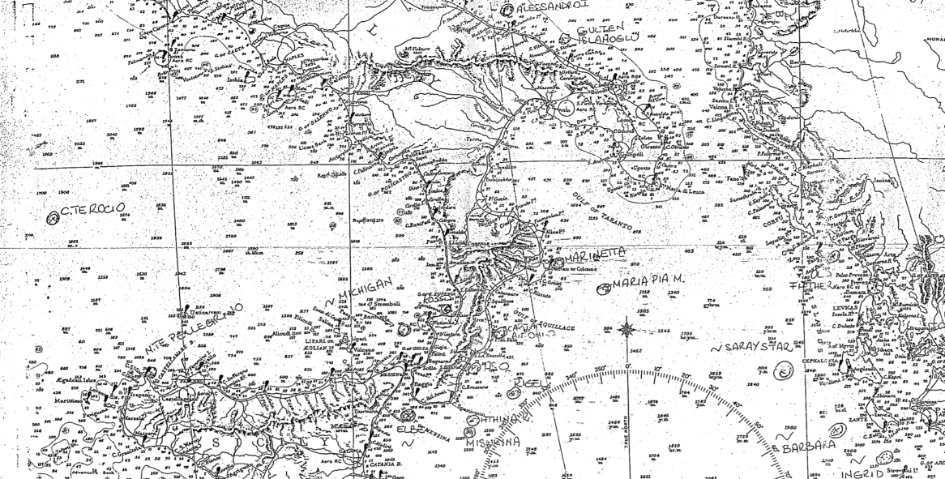
The so-called “Odm map,” which stands for Ocean Disposal Management, the company owned by Lombard engineer Giorgio Comerio that managed a vast network of cross-border toxic waste trafficking, for which the 'Ndrangheta allegedly provided manpower. Source: Legambiente.
“Marea Blanca” (“White Sea”) is the name of the international operation that on last 12 January enabled the Spanish Policía Nacional to impound nearly ten tons of cocaine off the Canary Islands. The drug was concealed on a freighter carrying salt, which had come from Brazil on its way to Europe. It was intercepted and towed to the port of Santa Cruz de Tenerife after having exhausted its fuel.
This crackdown was made with the backing of the Maritime Analysis and Operations Centre (MAOC) of the Drug Enforcement Administration (DEA), of the Brazilian Federal Police, the National Crime Agency (NCA) and the French and Portuguese authorities, and led to the arrest of 13 persons and the impounding of 294 bails of drugs and one pistol. It was the largest anti-drug trafficking operation ever carried out by Spain on the high seas, but is only the most recent of a long series.
In 2025 nearly 31 tons of cocaine were seized in the Caribbean, mostly in route for the Mediterranean, relying on a complex criminal ecosystem connecting the Americas, Europe, North Africa and the Middle East. But the white powder is not concealed only in big containers under rice and bananas: it now travels also in the latest model speedboats, sail-boats, luxury yachts, freighters, merchant ships, tankers and even submarines. Thanks to their growing economic power, smugglers now have specialised engineers at their disposal and clandestine naval yards to build “narco-submarines” capable of covering long distances undetected by police radars or launches.
The new cocaine lords and the drop-off system
The sea-routes represent one of the main narcotics gateways to Europe as shown by the increasing numbers of seizures in European harbours and at sea. And it is what has been revealed by MAOC, a joint campaign against drug-trafficking launched in 2007 by Belgium, France, Germany, Ireland, Italy, the Netherlands, Portugal, Spain and the UK. The reinforcement of controls on major shipments in the main harbours of the UE or in transit towards these has indeed led to the seizure of over 1,800 tons of drugs between 2019 and 2024, obliging the criminal groups to constantly modify their routes and their techniques of transport and delivery.
According to an investigation carried out by Irpi Media and The Black Sea, one of the methods most employed today is the drop-off, which consists of unloading the drug from cargo ships onto floating rafts where small, light craft can pick it up later, since it is easier for them to avoid inspection.
The cocaine produced in Colombia is first carried to the Caribbean on rivers flowing from Colombia to Venezuela, then loaded onto freighters in Suriname with the help of Dutch-Moroccan criminal organisations, and in Trinidad-and-Tobago with the help of local gangs.
According to the MAOC, some 80 tons were brought into the Mediterranean by this system in 2023 as against 12 tons the year before. “Italy is sort of the MAOC’s custodian”, declared colonel Luca Parrilli, liaison officer for the Central Direction of the anti-drug service. “We intercept everything on its way to North Africa, Turkey or the Middle East.”
The first seizure operated by the Italian authorities on a drop-off operation was in 2023 and concerned a Turkish freighter: the Plutus. The ship had left the Venezuelan harbour of Sucre and taken on five tons of cocaine off Trindad-and-Tobago before setting ail for the Canary Islands and from there to Sicily. When it reached the international waters south of Capo Passero (Syracuse), some crew members had thrown the drug overboard and it was later pulled out of the sea by one Bagnara Calabra in his fishing boat, the Ferdinando de Aragona. It was the aero naval command of the Guardia Finanza that intercepted the operation, boarded the vessels and took them to Termini Imerese harbour, where both crews were arrested.
“These aren’t little piddling operations. The value of shipments weighing five tones or more leave no room for improvisation”, writes the Italian journalist Cecilia Anesi.
“To handle them, it takes big criminal organisations capable of getting together at both ends. Latin-American drug cartels for the sales and specialists in charge of loading the departing ship; Italian mafias as purchasers in charge of recovering the shipment on the Mediterranean, preferably in international waters so as to be less easily prosecuted under the laws of this or that country. A network of complicities is also required, necessarily including the captains of ships (freighters and fishing boats) and, in all probability, the ship-owners.”
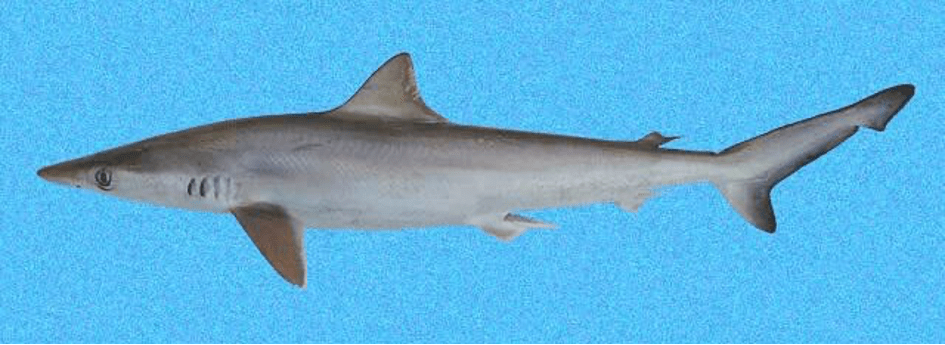
In 2023, an investigation ascribed the erratic behaviour of certain sharks off the Florida coast to the consumption of cocaine, large quantities of which are present in those waters. Another study revealed that all specimens analysed from a sampling taken in Brazil contained traces of the same substance in their organisms. More recent researches evaluate its impact on the maritime eco-system. Source: Wikimedia Commons.
A recent request for indictment by the Istanbul Anti-Money Laundering Prosecutor's Office shows that the person at the summit of this widespread network has for many years been the “Turkish Escobar” Urfi Çetinkaya, formerly key figure in the heroine traffic between Iran and the Netherlands and, after 2020, between Latin America and Europe, who died in prison in 2024.
His fellow countryman, Ali Korman Erbacloglu, is thought to have coordinated his operations by means of dummy corporations in tax heavens, especially the Marshall Islands, and kept up the contacts with ship-owners and crews, mostly Turkish but also Ukrainian, Azerbaijani and Syrian. After his arrest in 2022, Sinan Köroglu and a powerful shipowner from Mardin, known as Y.D., are thought to have concluded an international deal between Colombian purveyors and purchasers in Albania and Calabria.
“According to the Turkish investigators, the Colombians belong to a drop-off consortium in which they hold 50% of the “cake”, while the rest is thought to be shared between the Albanians for 45% and the Turks for the remaining 5%”, Anesi specifies. “The Italians – Calabrians, to be precise – are thought to be only the purchasers, who probably pay the Albanians, who probably take care of the other partners”.
Hashish and the “warriors’ drug”
Most of the hashish consumed in Europe comes from Morocco by way of Spain. According to the Central direction of the Anti-drug services in the Italian Ministry of Interior Affairs, this substance arrives by sea, either in big ships flying the Spanish flag which take on their cargo off the coast of Morocco or in small boats which load it on the high seas from fishing boats out of Morocco, or else through the Gibraltar straits in rubber dinghies.
“More recently, another route has been identified, transporting the drug both by sea and by land, from Morocco to a zone including Libya and Egypt” the ministry specifies. “In these traffics, vessels such as fishing boats or freighters are used”. In Italy, where hashish is still the most popular drug, it may come directly from Morocco by sea with the complicity between North African and local criminals”.
In recent years, the Mediterranean has also seen a significant rise in the traffic of captagon, known as the “warrior’s drug”.
This psychotropic derivative of amphetamine was invented in West Germany in the Sixties to treat attention deficit hyperactivity disorder (ADHD), depression and narcolepsy. It has stimulating properties as well as an inhibitory effect on fear. Today it is mostly synthesised illegally in Syria, with the probable implication of the former ruling Assad family who controlled the port of Latakia during the civil war, whence the shipments of the drug left for North Africa and Europe.
According to the London-based Middle East and North Africa Maritime Development Program (MMDP), captagon brought in 15 billion dollars each year to the Syrian government. Libya is another key point in this gigantic traffic, for it is where most of the storage and distribution of the drug is located, with small amounts for local consumption and the rest shipped by land through Chad, Egypt and the Persian Gulf and, across the sea, to Europe.
In summer 2026, 88 million pills of the drug were seized in Salerno harbour.
“These new synthetic drugs […] unlike cocaine and heroine are measured not by weight but by single unit, weighing a only a few grams, or even milligrams, since they may be up to a hundred times more powerful than traditional drugs” in the words of the Regio de Calabre public prosecutor, Giuseppe Borelli at the 12th edition of Trame, the Festival of Books on the Mafias.
As the inspections of containers are carried out according to where they come from, Borrelli explained, any shipment from Syria would be suspected of transporting illegal substances. In order to circumvent the inspections, criminal organisations increasingly resort to a stratagem called tramacco: “The containers transit via intermediate harbours in order to modify their origins”, the prosecutor explained. “That’s why it is becoming increasingly essential to focus our attention on the transparency of the whole sector of customs and maritime transport”.
Another problematic aspect is the lack of adequate technology. Rigorous inspection requires emptying the container, which could be avoided thanks to latest-generation scanners capable of immediately detecting the presence of drugs, but few Italian ports have them.
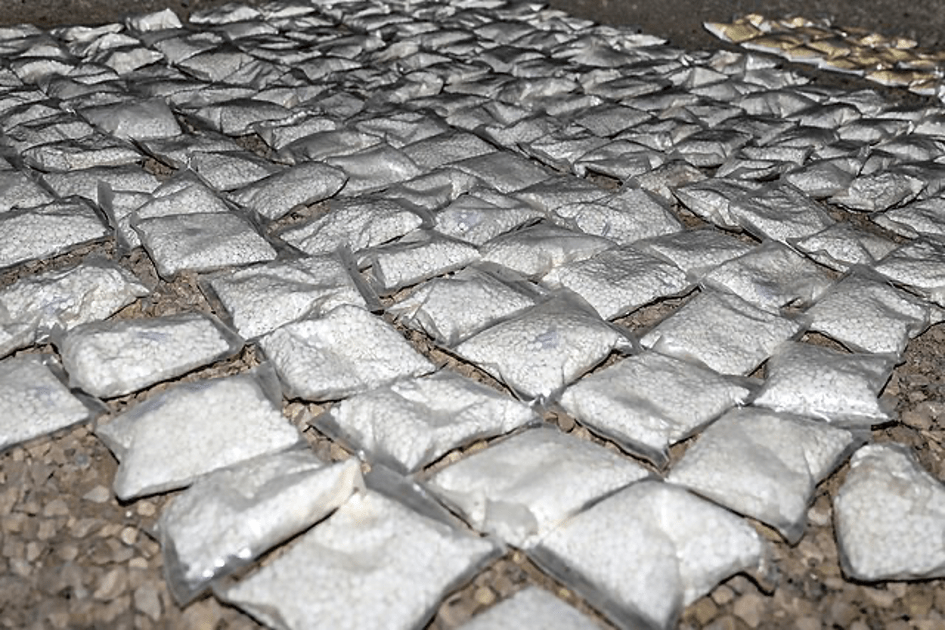
Captagon used to be synthesised in underground laboratories in Eastern Europe, Turkey and Lebanon, where its production contributed to financing Hezbollah after the 2006 war with Israel. When the Syrian civil war broke out in 2011, the use of the drug rose enormously among militiamen. Source: Wikimedia Commons.
Trafficking gas-oil and human beings
On the other hand, it was the Catania prosecutor’s office with its “Dirty Oil” investigation that brought to light in 2017 a vast criminal network for petroleum smuggling, operating in Libya, Malta and Sicily. According to the investigators, between 2015 and 2016 nearly 83 million kilos of Libyan gas-oil, illegally pumped from the Zawiyah deposits and passed off as Saudi using fake documents, arrived in Italy. In Libya, the operation benefited from the protection of the Petroleum Facilities Guard, a company in charge of the surveillance of the platform, managed by the Al-Nasr militia, also responsible for the nearby detention centre for migrants, notorious for its violations of human rights and all kind of violence. A key figure of this billion-dollar business was Abdl al Rahman, aka Bija, former head of the Zawiyah naval academy, sanctioned by the UN for traffic in human beings and killed in an ambush in 2014.
According to the UN group of experts, these smugglers disposed of some 70 vessels including several small tankers and fishing boat tugs, while a Maltese transport company headed by Darren and Gordon Debono handled shipping the goods to Augusta (Syracuse), Civitavecchia (Rome) and Porto Marghera (Venice). Some Sicilian businessmen connected to the Santapaola-Ercolano mafia clan introduced the fuel into the circuit of the “white pumps’, those service stations with no company logo which some say are managed by organised crime. Although the investigation in Catania and later investigations have diminished it considerably, this traffic remains today one of the chief sources of income for the Libyan militias, along with the traffics of drugs, arms and human beings.
Trans-border alliances
The decision taken by several governments to suspend rescue operations for migrants in difficulty and to criminalise the NGOs that perform sea rescues works in favour of the mafias that can prosper unhindered, far from prying eyes. Besides which the smugglers’ routes coincide with those followed by people desperate to reach our shores, and which organised crime uses to its profit, those same criminals for which Europe pays to keep from crossing. Though already wanted by Interpol and sanctioned by the UN for illegal activities and human rights violations, Bija had been officially invited to Italy for negotiations on the migratory flows in 2017. The recent “Almasri case” is another significant example.
Former chief of the criminal investigation department in Tripoli, head of the “Rada” militia, and long the object of a search warrant issued by the International Criminal Court for crimes against humanity and war crimes, the Libyen citzen named Osama Elmasry Njeem, aka Almasri, was arrested on 10 January 2025 in Italy, where he was innocently attending a football match. In spite of the warrant issued by the Hague, Almasri was set free 48 hours later and sent home on a special flight by agents of the Italian secret service.
After his previous arrest in Libya last November, the Meloni government had claimed it knew at the time about the arrest warrant issued by the public prosecutor in Tripoli, which is why it had organised his departure so rapidly. However, the opacity of this affair had aroused considerable indignation in Italian public opinion and caused serious diplomatic tensions1.
Almasri’s militia was indeed officially assigned by the Tripoli government to guarantee the security of the region but it actually managed the Mitiga detention camp, where Amnesty International had denounced, on several occasions, acts of torture and forced disappearances. The militia also smuggled drugs and petrol.
“The decision to externalise our borders in Libya means handing ourselves over to figures such as the Libyan mafia”, journalist Roberto Saviano wrote, highlighting the real risk of making our leaders vulnerable to blackmail by warlords “who open and close the floodgates of migration flows and control departures.”
20,000 toxic wastes under the sea
In Italy, between 1980 and 2000 the phenomenon of “sacrificed ships” spread rapidly: hulks that were sunk deliberately to get rid of nuclear waste illegally. This criminal practice not only made it possible to lower considerably the cost of eliminating extremely dangerous products but also guaranteed a large insurance benefit for the owners. Legambiente has counted at least 88 vessels that were scuttled in our seabeds between 1979 and 2000. Many steamed out of other Mediterranean ports or out of Italian ports before disappearing from the radar-screens and sinking mysteriously, without reporting engine failure or calling for help, in precisely the deepest parts of the Ionian or Tyrrhenian Sea.
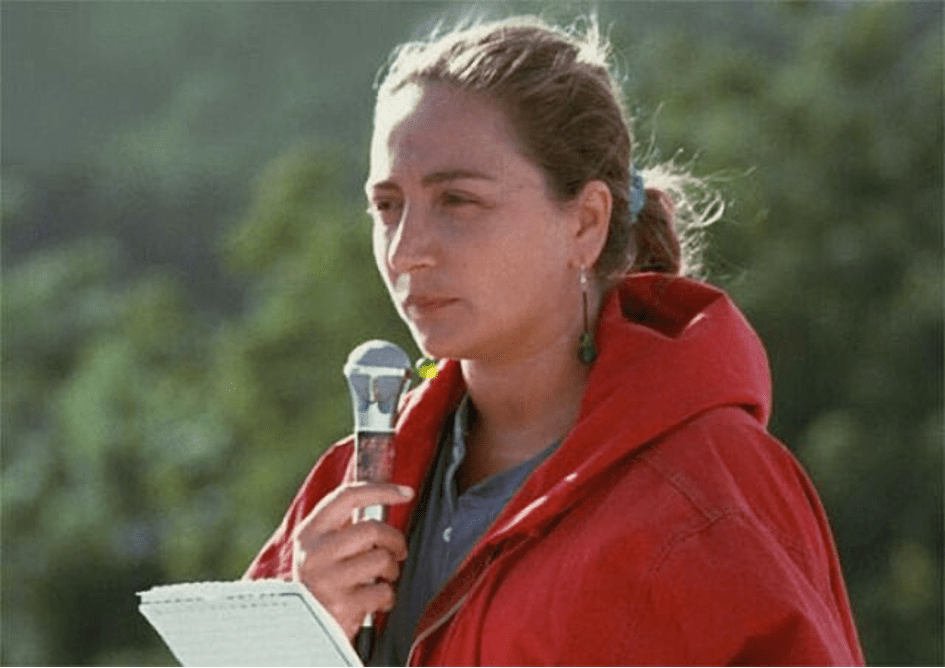
Waste trafficking is often linked to arms trafficking: it was while investigating this connection that RAI journalist Ilaria Alpi and cameraman Miran Hrovatin were killed in Somalia in 1994. Photo: Ilaria Alpi. Source: Wikimedia Commons.
Even today there are some companies that still use that system.
“Between May and July 2000, nearly three hundred containers full of waste left the port of Salerno en route for Sousse, in Tunisia” Carnì accuses. “On the African shore, the Soreplast Company was supposed to treat the thousands of tons shipped by Sviluppo Risorse Ambientali (SRA), based in Polla. However, the Tunisian company’s re-treatment factory only existed on paper.
After verifications carried out by the port authorities and the Tunisian public prosecutor, Italy was immediately requested to take back its waste, as already happened in 1998, when Nigeria and Lebanon had become aware of the enormous ecological damages caused by our waste on their land and on the local population.
Translated from French By Noël Burch
This article was produced as part of the activities of the network Independent Media on the Arab World. This regional cooperation brings together Assafir Al-Arabi, BabelMed, Mada Masr, Maghreb Émergent, Mashallah News, Nawaat, 7iber and Orient XXI.
1.On January 26, 2026, the International Criminal Court decided to refer the matter concerning Italy to the Assembly of States Parties, confirming that, according to the judges in The Hague, the Meloni government had violated its international obligations by releasing and repatriating Almasri. The next meeting of the Assembly will take place in December 2026.
2. Under the direction of Andrea Carnì and Andrea Pappalardo, Per mare. Storie di merci, destini di uomini, disuguaglianze globali. Castelvecchi, 2024.