About
Babelmed, an independent magazine
Babelmed provides articles and reports addressing a wide range of issues, particularly focused on countercultures and emerging art forms. In addition, it regularly presents investigative reports related to issues faced by Mediterranean countries such as migration, gender, youth etc.
Over the years, Babelmed has also participated in different publishing projects such as “Ebticar” , in collaboration with CFI (Canal France International), “Web Arts Résistances” (a network of five independent media), and “Medfeminiswiya” (a feminist platform). These were very important occasions to discover the reality of Mediterranean citizens, especially in a period of deep crisis and essential transformation.
Our funders:
- Fondation René Seydoux (Paris)
- ECF – European Cultural Foundation (Amsterdam)
- EU Commission Delegations (Damascus and Tunis)
- Ford Foundation
- Compagnia San Paolo (Turin)
- Friedrich Ebert Foundation
- City of Rome
- EU Commission
- Istituto Paralleli (Turin)
- Anna Lindh Foundation (Alexandria, Egypt)
- Il Caffè dei giornalisti
- CFI (Canal France International)
- PACA region
- France Foundation
- Le Fonds pour les Femmes en Méditerranée
A network of Mediterranean journalists

Federica Araco participated in the Italian version of Babelmed.net from 2008 to 2015, as a journalist, editor and translator from English and French and a contributor from Italy to the series of reports that involved the various Mediterranean countries. She mainly focuses on human rights, migration, gender and sustainable development. For three years she was editorial manager of "The Trip Magazine", a quarterly travel and photography magazine for which she also organized several artistic projects and events related to photography. In 2015 she created the blog slowsud.wordpress.com dedicated to slow travel in which she publishes, without haste, articles, photographic reports and stories about slowness.

Stefanella Campana worked as a journalist for the Italian newspaper “La Stampa” in Turin. She was also in charge of a blog on the online version of Don.net. From 2009 to 2016, she was responsible for the Italian version of Babelmed.net, collaborating in the framework of different European projects and major inquiries. She has authored and co-authored texts about the situation of women and she is currently the representative of the Commission for Gender Equality (CGE) within the Italian National Press Federation (FNSI). She is also a member of the national network GIULIA (Giornalisti Uniti Liberi e Autonomi) and, since 2015, she has been organizing training sessions on gender issues for journalists. She is regularly invited to debates on these issues.

Catherine Cornet is a lecturer in Middle Eastern history and culture at the American University of Rome. In particular, her research focuses on art and politics in the Middle East. She writes about Arab press for the Italian weekly newspaper “Internazionale” and she was part of Babelmed team for seven wonderful years.
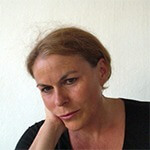
Nathalie Galesne is the founder of the online magazines Babelmed.net and Web Arts Résistances. She has been the editor-in-chief of Babelmed for 16 years and she coordinated several investigative reports such as “Femmes, avoir vingt ans en Méditerranée”, “Tahqiq Sahafi: jeunesses méditerranéennes” and “Babelmed Monde arabe” about popular uprisings in Arab societies. She has also collaborated with various media including RAI, “Le Courrier de l’Atlas” and the “Gibraltar” magazine. She wrote several publications including “Syria, éclats d’un mythe” (Actes Sud, 2002) and, in October 2014, she received the Mediterranean Journalist Award for her reportage on Lampedusa: “Lampedusa, la tragédie, d’une île”. She also teaches French at the University .

Elizabeth GRECH (born in Malta, 1978 – living in France since 1999) is a self-taught translator and works with various NGOs, cultural and artistic organisations. As a consultant-translator with the CIHEAM, she is in charge of the English version of publications and official documents. Since October 2018, she is in charge of translation, communications, networking and international relations with Mana Chuma Teatro, (Italy). She is also a literary translator and has translated several contemporary Maltese poets into French. Many of her translations have been published in book form and in literary journals. Her own poetry has appeared in a number of anthologies and journals in different languages (English, Italian, Spanish, Albanian, Esperanto). Her first poetry collection “bejn baħar u baħar” was published by Merlin Publishers (Malta, February 2019). The Italian translation “Terre sospese” by Virginia Monteforte and Massimo Barilla was published by Capire Edizioni (Forlì, August 2019). The Greek version “Μετέωρες χώρες” translated by Ioanna Karameli was published by Vakxikon Publications (Athens, March 2021). The Spanish version with translations by Marisol Bohorquez-Godoy will be shortly published by RIL Editores (Barcelona, 2022). http://unemeretlautre.com

Cécile Oumhani is a poet and a novelist. In her novels, she explores the absence and distance that have marked her. She has worked as a professor and researcher at the University of Paris-Est Créteil. She won several awards including the “Prix littéraire Maghreb – Afrique méditerranéenne” of the ADELF 2016 for her novel “Tunisian Yankee” and the “Prix européen Virgile 2014” for all her work. Among her novels, there are “Une odeur de henné”, “Les racines du mandarinier”, “Le café d'Yllka” and “L'atelier des Strésor”, all published by Elyzard. Her poetry collections include “La nudité des pierres” published by Al Manar, “Passeurs de rives”, “Marcher loin sous les nuages” published by APIC in Algiers and “Mémoires inconnues” by La Tête à l'Envers editions. She is a member of the editorial board of Siècle 21, a collaborator of Apulée and a member of the Parliament of Francophone women writers, whose first session was held in Orléans in September 2018.

Hanan Kassab Hassan is a Syrian professor. She works at the Institute for Theater, Audiovisual and Cinematographic Studies (IESAV) at Saint Joseph University in Beirut, Lebanon. In addition to her long academic career, she has been a professor at the University of Damascus, Dean of the Higher Institute of Dramatic Arts in Damascus, General Director of the Damascus Opera, and General Commissioner of “Damascus: Cultural Capital of the Arab World in 2008”. She was a member of the Union for the Mediterranean Cultural Council and of the “Fondo Roberto Cimetta” for mobility. She has been a UNESCO external consultant (IFPC and ICH) and she has published several research articles about theatre and culture, including a theatre and performing arts vocabulary. She has also translated into Arabic works by Genet, Koltès, and Beckett and she has been working for Babelmed as a journalist and translator for over ten years.
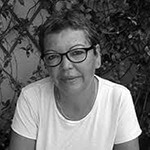
Ghania Khelifi is the former editor-in-chief of the Algerian newspaper “Liberté”. In France, where she lives, she works as a political journalist and she is responsible for the “Mission égalité hommes-femmes”. She graduated in litterature with a specialization on Kateb Yacine oeuvre and career. She signed his first retrospective “Kateb Yacine, poèmes et éclats” in Algiers, at the beginning of the Black Decade in 1991. As a specialist in Algerian society, she has been working for Babelmed since its establishment.

Nadia Khouri-Dagher is a Lebanese journalist and reporter. As she is very interested in the Arab world, southern countries, and multiculturalism, she has been working for Babelmed since 2007. She is also the creator of the “MUZZIKA!” column. She graduated in development economics at ESSEC and worked as a social researcher at the IRD. Her Ph.D. consists of a two-year investigation on women and families who survive in a poor neighbourhood of Cairo. She is the author and co-author of fifteen books including “Beyrouth au Coeur”, “Hammam & Beaujolais” and “L’islam moderne - Des musulmans contre l’intégrisme”. She created “Yasmina”, the first monthly magazine in France about women and eastern societies. In addition, she was a journalist of “Sources” (UNESCO) and she collaborated with Le Monde Diplomatique, Le Monde Magazine, Jeune Afrique, RFI, TV5, Al Ahram Hebdo, El Watan, El Pais, Le Soir, etc. Her website: www.au-coeur-du-monde.com

Nejma Rondeleux worked as a journalist in Algiers for six years where she participated in the launch of the “Huffington Post Algeria” website and the web radio “Radio M”. She is constantly on the move between France and Algeria and she contributes to several journalistic projects in the Mediterranean.

Marianne Roux is an “oriental” Frenchwoman. She has a great passion for the films of Amin Maalouf, Samia Gamal, and Farid Al Atrache, for the Zaatar and the expressions “ma3lesh” and “Incha Allah”. #Egyptomaniac

Sana Sbouai has been a journalist for over 10 years. She lived in Tunisia between 2011 to 2015 where she founded the platform “Inkyfada” about freedom and human rights. Since then, she spends her time between Paris and Tunis without forgetting her interest in social issues. She is currently the editor-in-chief of Babelmed. #equality #migration @SanaSbouai
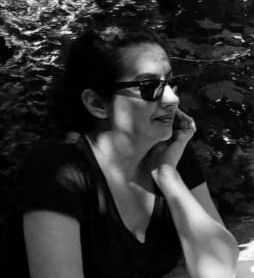
Ferida Pacha is a writer and translator. From Constantine to Paris, via Heraklion and Berlin, her work establishes connections between the Mediterranean shores and languages and also between different eras: from pre-Islamic Arabia to post-independence Algeria, between founding myths and new aspirations. As an independent researcher and teacher, she wishes to invest her knowledge in the preservation of memory.