Turkey
The walls of the Gezi Park
2013-10-16
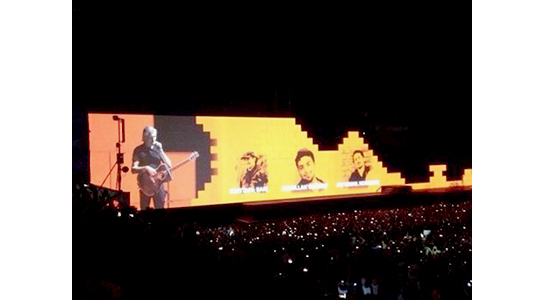
On the virtual wall that came down at the concert of Roger Waters in Istanbul in August there were the images of the people killed at the Gezi Park. This was Roger Waters’s way of showing solidarity with the Gezi protestors.
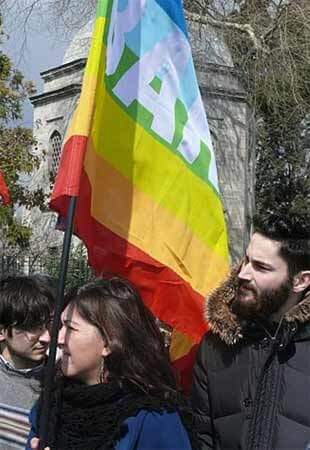
The virtual destruction of the wall at the concert can also be seen as a symbolic representation of the walls that came down within the Turkish society as a result of the Gezi events. The Gezi protests brought together social and political groups of people that were almost always seen as opponents. There were gays/lesbians, conservatives, liberals, religious, atheists, nationalists, minorities on the same streets and squares fighting together against the iron fist of the government.
What Sırrı Süreyya Önder, Turkish film director, writer and lawmaker from the Kurdish “Peace and Democracy Party” (BDP) said at a conference in New York on 4th October reflects this unifying aspect of the protests: “In this country (Turkey) there’s an ongoing war since 40 years. This war has used various tactics to turn the peoples into enemies. And it was successful with some of these tactics. Gezi Park has created a very important experience in regard to the fraternity of peoples, in regard to achieving peace through the peoples… And the system was afraid of this. It was also very afraid of the joy of the Gezi protestors, and not of their anger. There (at Gezi Park), for the first time came real a utopia that could give hope to people of the world.”
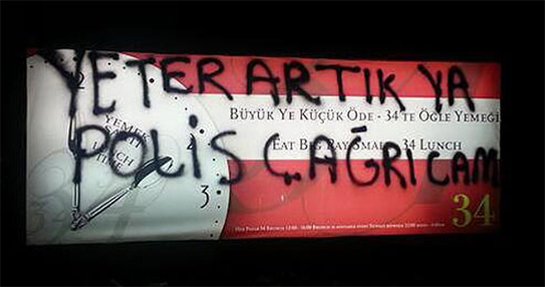
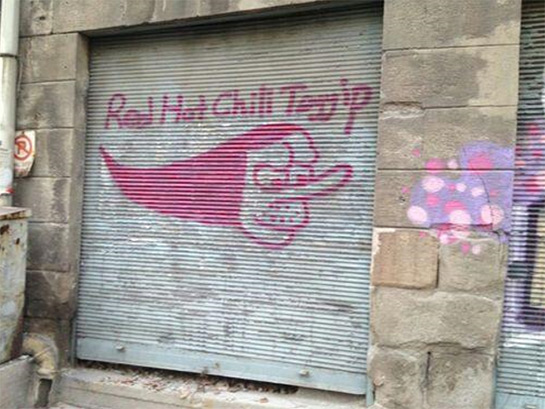
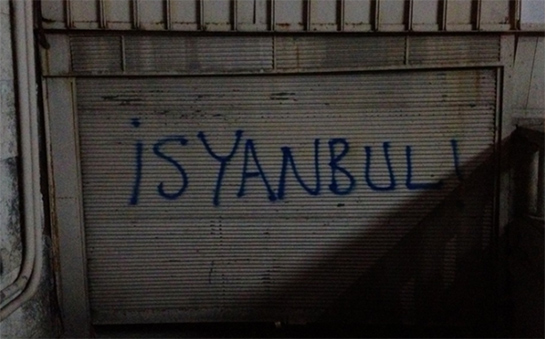
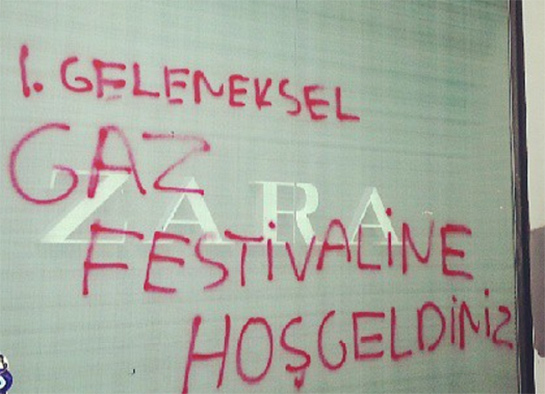
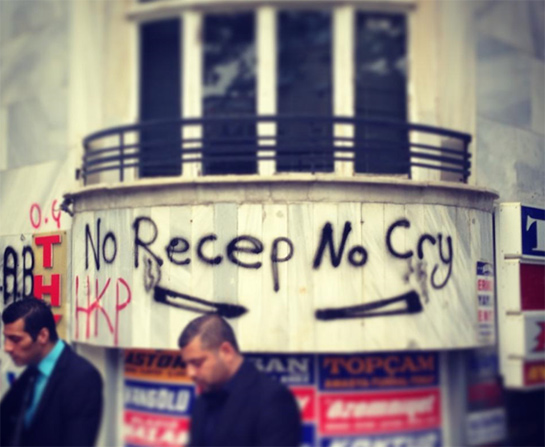
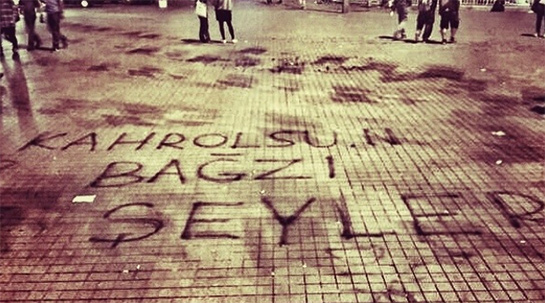
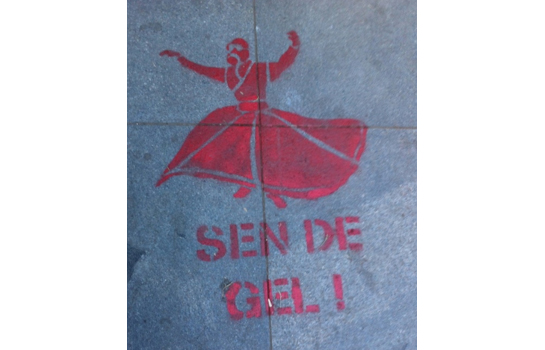
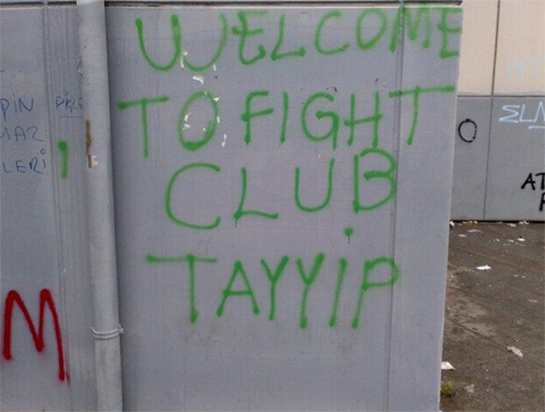
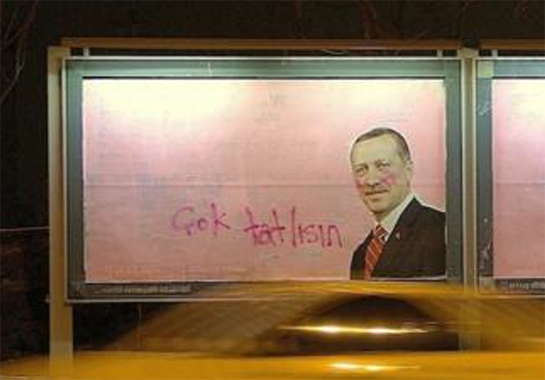
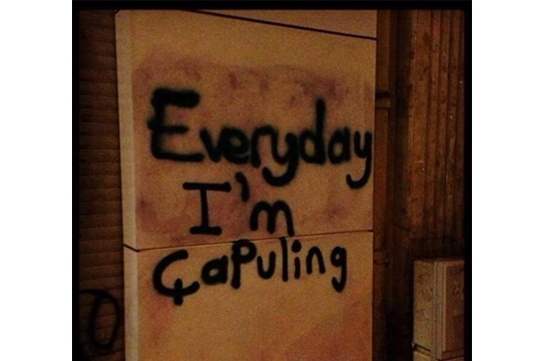
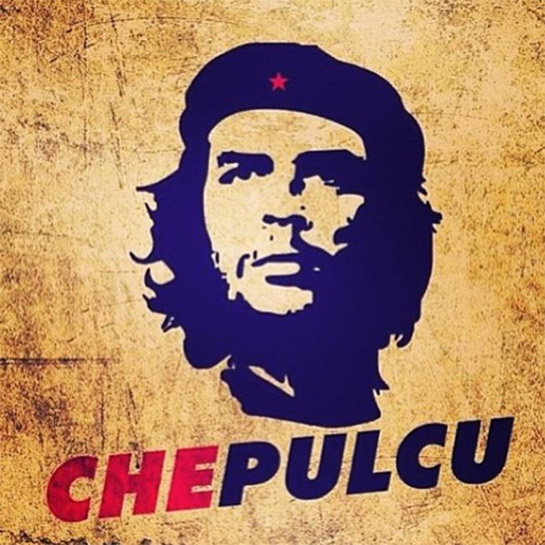
Besides the invisible walls brought down by Gezi events, one of the main actors of the protests were the visible, concrete walls, that were the backdrop to the spirit of the protests. The genius that made these protests so particular was seen in the creative and humorous graffiti and slogans put on the walls, mostly making fun of the brutality of the police and the government against the protestors. Here are some of the most famous “Gezi walls”:
Övgü Pınar
16/10/2013
Lire aussi