Algeria
Fanfaraï: Beyond differences and convictions
2010-11-10
Given the number of its artists and the profusion of trumpets, saxophones, trombone and tuba, Fanfaraï is a brass band. Without counting the dancers, they are 11. It would be unjust to define the group only in this way so it is important to add that they interpret a musical range going from jazz to gnawa passing by raï and salsa.
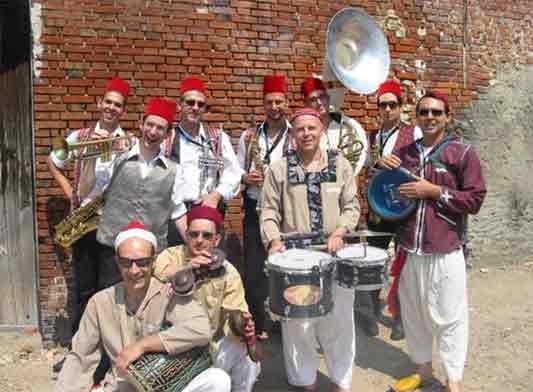
The audience that participated to their last performance in Paris didn’t know which rhythm to follow. As from the beginning, we are perplexed by Samir Inal, the bandleader announcing a “gnawa jazz song”! Pushing his surprising arrangements even further, Patrick Touvet draws heavily on North African and Afro-Cuban music and takes a trip into jazz obliging the Darbouka to cohabit with drums and the violin with the raîta .
A cheerful combination that is as interesting as the diversity of cultures and trajectories of the musicians themselves. Samir Inal tells us that “at the beginning nothing predicted that we could come together. Some of us come from jazz schools and others from conservatoires of music like Babou the singer and violinist who comes from Oran”. Samir was a very serious student in Paris where he arrived from Algeria ten years earlier. He then created a group called “Zernadjia”.
“I didn’t know anything about music and then I suddenly changed direction,” tells us Samir with a laugh. French, North African and Franco-North African musicians bring their energy and talent together. All these encounters consolidate the experience till the emergence of Fanfaraï in 2005.
So what is the concept? The brass band goes along the same line as the tradition of these street orchestras that animated rituals and feasts in Algeria from the beginning of the century till the 1970’s. Idbalen was common in the region of Kabylie, Zernadjia and Algiers and its surroundings. These bands used to perform in public squares, streets and mausoleums during the feast of local saints. Inseparable from festive events, these street musicians used tbel (drums), ghaita (flute) and tbilette (small drum or tambourine) and kerkabou according to their region. Fanfaraï combines the saxophone, congas, the trombone or the tuba to these instruments.
The brass band feels as at ease in street performances often called upon by city councils in the Parisian suburbs, as on stage even if the musicians’ comments reveal a preference for public space, open for all. “The street is more lively, more visual, people participate and dance”.
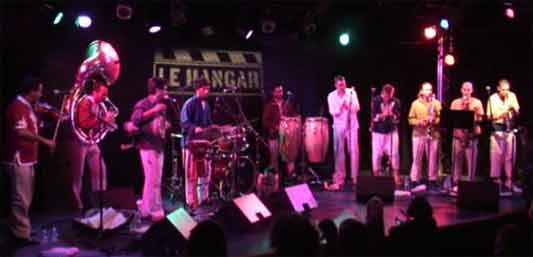
The musicians assure us that they manage to reach all kinds of audience because each one finds something of what he knows, of what he loves in their music. Samir adds that on the contrary of what we could think, Algerians finds it sometimes difficult to let go as they feel lost in all this fusion. Just for a few moments though as Fanfaraï rapidly succeeds to carry its audience away beyond ethnic descent or nationality, towards territories of tolerance and pleasure.
The audience that participated to their last performance in Paris didn’t know which rhythm to follow. As from the beginning, we are perplexed by Samir Inal, the bandleader announcing a “gnawa jazz song”! Pushing his surprising arrangements even further, Patrick Touvet draws heavily on North African and Afro-Cuban music and takes a trip into jazz obliging the Darbouka to cohabit with drums and the violin with the raîta .
A cheerful combination that is as interesting as the diversity of cultures and trajectories of the musicians themselves. Samir Inal tells us that “at the beginning nothing predicted that we could come together. Some of us come from jazz schools and others from conservatoires of music like Babou the singer and violinist who comes from Oran”. Samir was a very serious student in Paris where he arrived from Algeria ten years earlier. He then created a group called “Zernadjia”.
“I didn’t know anything about music and then I suddenly changed direction,” tells us Samir with a laugh. French, North African and Franco-North African musicians bring their energy and talent together. All these encounters consolidate the experience till the emergence of Fanfaraï in 2005.
So what is the concept? The brass band goes along the same line as the tradition of these street orchestras that animated rituals and feasts in Algeria from the beginning of the century till the 1970’s. Idbalen was common in the region of Kabylie, Zernadjia and Algiers and its surroundings. These bands used to perform in public squares, streets and mausoleums during the feast of local saints. Inseparable from festive events, these street musicians used tbel (drums), ghaita (flute) and tbilette (small drum or tambourine) and kerkabou according to their region. Fanfaraï combines the saxophone, congas, the trombone or the tuba to these instruments.
The brass band feels as at ease in street performances often called upon by city councils in the Parisian suburbs, as on stage even if the musicians’ comments reveal a preference for public space, open for all. “The street is more lively, more visual, people participate and dance”.
The musicians assure us that they manage to reach all kinds of audience because each one finds something of what he knows, of what he loves in their music. Samir adds that on the contrary of what we could think, Algerians finds it sometimes difficult to let go as they feel lost in all this fusion. Just for a few moments though as Fanfaraï rapidly succeeds to carry its audience away beyond ethnic descent or nationality, towards territories of tolerance and pleasure.
Ghania Khelifi
Translated into English by Elizabeth Grech
(10/11/2010)
Translated into English by Elizabeth Grech
(10/11/2010)
Lire aussi
Douar de femmes, dernier film du cinéaste algérien Mohamed Chouikh
Une «fable intemporelle» ou une histoire à thèse? Comme deux autres fictions récentes, Rachida d’Amina-Bachir Chouikh (2003) et El Manara de Belkacem Hadjadjd (2005), Douar de femmes soulève le problème de la crédibilité du traitement cinématographique des événements tragiques de l’Algérie des années 90. Sous prétexte qu'il «ne filme pas le réel», le cinéma peut-il lui tordre le cou ou carrément l’inventer?
2006-02-10
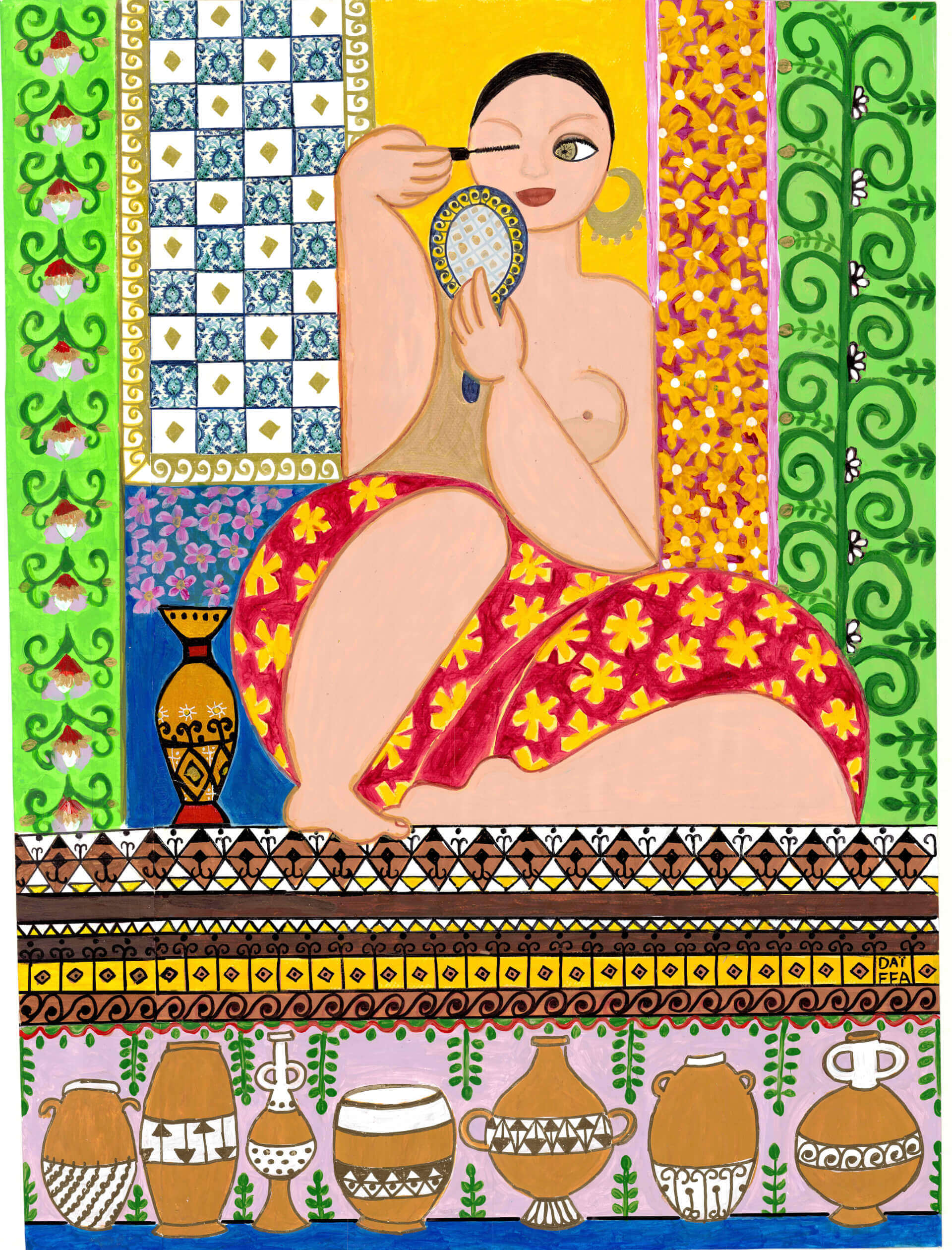
L'artiste algérienne Daïffa célèbre en couleurs le plaisir de vivre algérien, vu côté femmes
Les toiles naïves et colorées de l’artiste algérienne Daïffa pourraient s’intituler « Femmes d’Alger dans leurs appartements, années 2000 », pour actualiser la série réalisée par le célèbre peintre français Eugène Delacroix, lors de son séjour en Algérie au XIX° siècle.
2019-02-11
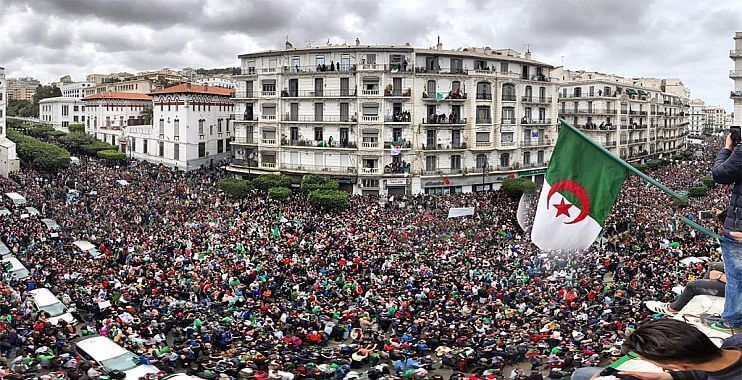
Algérie, les jeunes du Hirak : « Peuple connecté, système déconnecté »
Les libérations n'ont pas fait oublier non plus les humiliations subies par les hirakistes. Comment oublier le journaliste Khaled Drareni, devenue icône du mouvement ? Comment oublier que le jeune Walid Kechida, contre lequel le parquet avait requis cinq ans de prison accusé d’“offense au président”, “aux préceptes de l’islam” et d’“outrage à corps constitué” a été torturé et violé en détention.
2021-03-05