Narration Versus Myth
2010-05-31
They drank local wine which owes its name to the Persian poet Omar Khayyam at the Greek Club in Alexandria, evoked the Cavafy muse, native of Istanbul and spoke of the Mediterranean dream from Homer to Sarkozy.
But the real cohesive element in the debate was the discussion on "emotional geography". The one of the twelve writers coming from 8 countries situated across the Mediterranean to celebrate the 500 thousand books donated by the French National Library to the Bibliotheca Alexandrina last April.
Their words were full of “I remember…” and their texts had often a nostalgic touch without erasing the bad memories or emphasising the good ones… Instead, the tragic past of the region, its contradictions, its fragmentations and the strength of myth were quite present all along the discussions on the theme of “Writing the Mediterranean”.
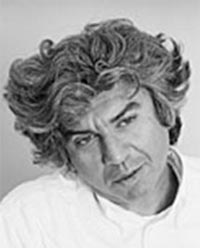 Can we write the Mediterranean as if we were in Oslo or elsewhere? “I don’t like the light, I write in front of my computer but it is as if there still was a diversity that pervades us, “replies hastily the Greek writer, Takis Theodoropoulos who believes that the power of narration transcends all borders. According to him, writing in the Mediterranean means protecting the beneficial curiosity of the gaze in a universe that is becoming more and more homogenous, “that resembles an invertebrate mollusc”. In this sense, boundaries can be both fruitful and disastrous as they are places of diversity and differences. And the Mare Nostrum should be thought of as a border and a place of transit at the same time, as a barrier as well as a haven.
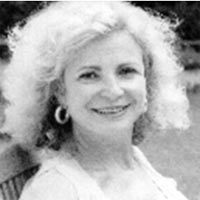 This space of circulation and exchange, and even conflict, inspires to these writers, certain characters and deeply moving subjects such as those of the Lebanese, Venus Khoury-Ghata. Their writings are also permeated by a certain excessiveness notes the French writer Paula Jacques who admits that her style is “very baroque, with lots of typical oriental tragicomic turn-ups”. Born in Cairo in a Jewish family, she often feels the unbridled desire to return to her homeland through writing. She comes back in search of her path and then after a while the principle of reality takes over.
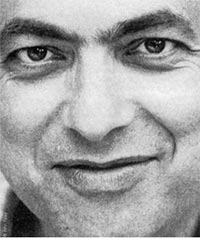 In a very subjective and very personal way, each one of them interprets the Mediterranean Sea according to his memories and sensations. This is the case of another French writer, also born in Cairo. Robert Solé says he is a sedentary person, “he is little attracted by the rest of the world”. In all his books, he describes Egypt, the country of his childhood, which, for him is inseparable from the Mediterranean. “In my mind, the sea is linked to summer and leisure activities and neither to rain nor to school. This is undoubtedly a truncated vision (…) but that’s how I see it and I don’t think it will change.”
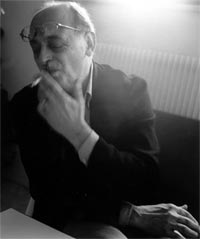 The more nomadic Italian writer Antonio Tabucchi completely refuses to return to his roots. “Men are not trees aren’t they? It is the trees that have roots; men have legs and legs are there to walk… This strange nationalism is nowadays coming back in a stronger way as a reaction to globalisation (…) I keep the dead persons that were close, in my heart and this way, I can walk, travel, be everywhere.”
Tabucchi has always cultivated alterity. For him, a novel first consists of the desire to be another person and therefore create a character. In order to do this, he starts writing in the sweltering heat of the afternoon in Lisbon where he lives for six months. Like the Turkish writer Nedim Gürcel, he lives in a language rather than in a country and is wary of calls of identity in this troubled and disturbing sea that Homer described as “black wine”, a symbol of exchange but never of uniformity.
But the real cohesive element in the debate was the discussion on "emotional geography". The one of the twelve writers coming from 8 countries situated across the Mediterranean to celebrate the 500 thousand books donated by the French National Library to the Bibliotheca Alexandrina last April.
Their words were full of “I remember…” and their texts had often a nostalgic touch without erasing the bad memories or emphasising the good ones… Instead, the tragic past of the region, its contradictions, its fragmentations and the strength of myth were quite present all along the discussions on the theme of “Writing the Mediterranean”.
Takis Théodoropoulos
Paula Jacques
Robert Solé
Antonio Tabucchi
Tabucchi has always cultivated alterity. For him, a novel first consists of the desire to be another person and therefore create a character. In order to do this, he starts writing in the sweltering heat of the afternoon in Lisbon where he lives for six months. Like the Turkish writer Nedim Gürcel, he lives in a language rather than in a country and is wary of calls of identity in this troubled and disturbing sea that Homer described as “black wine”, a symbol of exchange but never of uniformity.
Dalia Chams
Translated to English by Elizabeth Grech
(01/06/2010)
Translated to English by Elizabeth Grech
(01/06/2010)
Lire aussi
La remigration aux portes de l’Europe
La « remigration » s'impose désormais dans le débat public européen. Portée par la progression électorale de l'extrême droite – de l'Allemagne à l'Italie, en passant par la France et le Royaume-Uni – elle accompagne le durcissement des politiques migratoires de l'Union européenne. Comment ce concept est-il devenu le point de ralliement d'une nouvelle extrême droite européenne ? Retour sur l'ascension fulgurante d'un mot d'ordre désormais au cœur du débat politique.
2026-09-18
Rome, laboratoire de la remigration
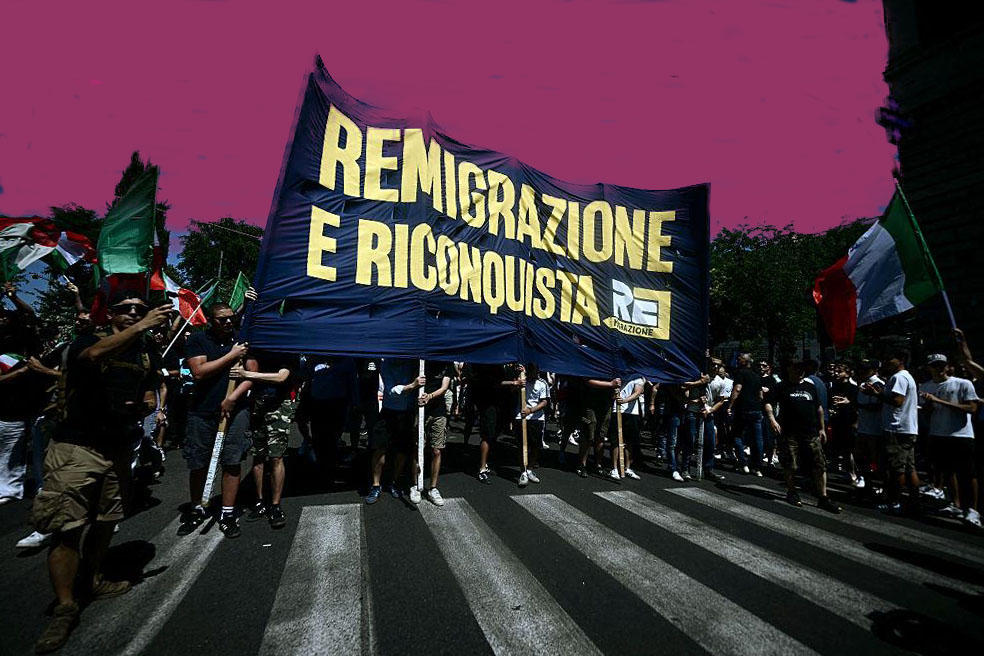
Longtemps cantonnée aux marges néofascistes, la remigration s'impose désormais dans le débat public italien. De CasaPound à Roberto Vannacci ou Matteo Salvini, en passant par les ambiguïtés de Giorgia Meloni, cette idéologie pénètre progressivement le langage politique et médiatique, participant à une redéfinition de la nation fondée sur l'exclusion.
2026-07-06
Comprendre l’islam des origines : la parole coranique (cycle II.1)
Pour le lecteur contemporain, le Coran se présente comme un livre : un texte constitué, organisé en cent quatorze sourates (ou chapitres), transmises sous une forme stabilisée au fil du temps. Cet état du texte est devenu si familier qu’il tend à faire oublier une réalité première : au moment où elle se fait entendre au début du VIIe siècle, la parole coranique ne s’est pas donnée d’emblée sous cette forme.
2026-06-10